
Beyond Release: Tracking Wildlife to Survival
In most rescue centers, the story ends the day an animal is released. Post-release monitoring is often too expensive and too hard to staff, yet it's the only way to know whether rehabilitation actually worked. Restore exists to close that gap.
“Release is not the end of rehabilitation. It is the beginning of understanding.” Restore Wildlife Education
Where Your Support Goes
From Your Support to the Field
The money raised by our NGO is reinvested directly into wildlife rescue centers, one center at a time.
Your Support
Donations, fundraising, and course enrollments.
Restore NGO
Every contribution is pooled for one clear goal.
One Rescue Center
We focus all resources on a single partner center at a time.
Station + Tracking Network
A research station and a LoRa tracking grid, built to last.
What We Build · Part 1
A Research Station at the Rescue Center
Each partner center receives a research station designed to welcome our student cohorts and give the center a permanent base for post-release research.
Accommodation
On-site housing so student cohorts can live and learn at the rescue center.
Research Workstation
A lab and office space to analyze tracking data, camera-trap images, and behavioral observations.
Education Center
A classroom for students, local communities, and schools to learn about wildlife.
Tracking Hub
The station's antenna connects to the LoRa network and collects data from the field.
What We Build · Part 2
A LoRa Tracking Network
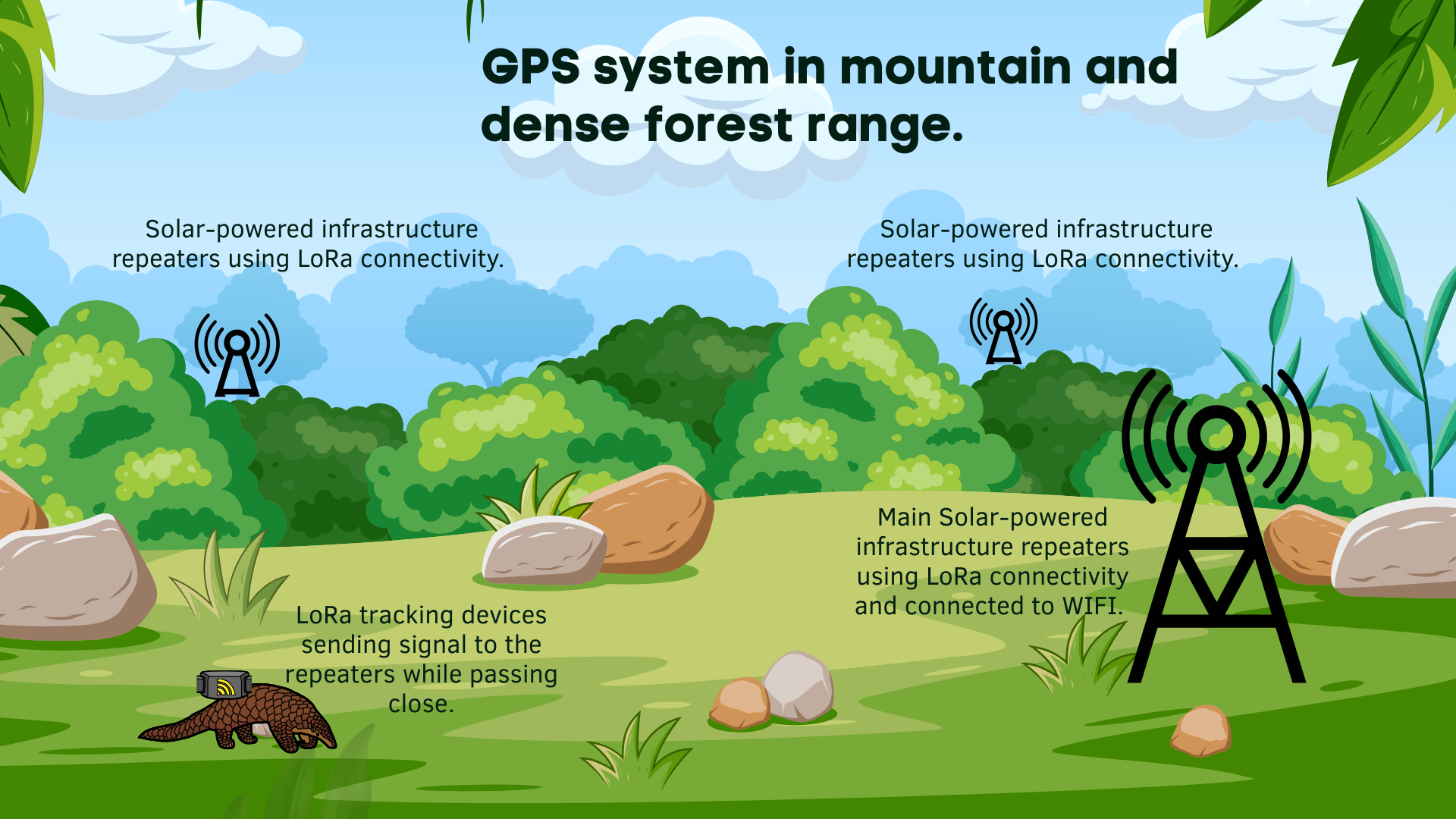
Released animals often live in remote forests with no phone signal. LoRa (“Long Range”) is a low-power radio technology that sends small bits of data over several kilometers. We install a network of solar-powered repeaters across the release area, so tagged animals stay connected wherever they roam.
LoRa Tracking Device
A light, low-power tag on the released animal sends a signal to the repeaters whenever it passes close.
Solar-Powered Repeaters
Small LoRa antennas spread across the mountain and dense forest pick up the signals and pass them on.
Main Repeater
A larger solar-powered tower collects data from all the repeaters and sends it online over WiFi.
Research Station
Students and staff follow each animal's movements and survival from the station.
Low Power
Tags last for months on a small battery, so animals are disturbed as little as possible.
No Phone Network Needed
The network works deep in the forest, far from any cell tower.
Cost-Efficient
Once the grid is built, tracking more animals adds no subscription cost per tag.
Post-Release Monitoring
Following Every Animal After Release
Tracking data is combined with field checks so we can see how each animal adapts to the wild, and use what we learn to improve rehabilitation for the next ones.
Daily
Movement & Survival Data
Collected automatically through the LoRa network.
1–2× / week
Visual Checks
Body condition, general health, and adaptation to the wild.
Every 3–6 months
Veterinary Health Checks
Recapture for a full check-up and tag maintenance.
📷 🛸 🔭
Field Research
Camera traps, thermal drone surveys, and behavioral observation to study wild populations.
Our Approach
One Rescue Center at a Time
Instead of spreading resources thin, we fully equip one center before moving on to the next.
Partner
We choose a rescue center that releases animals but lacks the means to monitor them.
Build
We fund and build the research station: accommodation, workstation, and education center.
Connect
We install the LoRa base stations and tag the first released animals.
Train & Monitor
Student cohorts arrive to learn hands-on and carry out post-release monitoring.
↻ Then we move on to the next rescue center.
Why Restore
Closing the Gap After Release
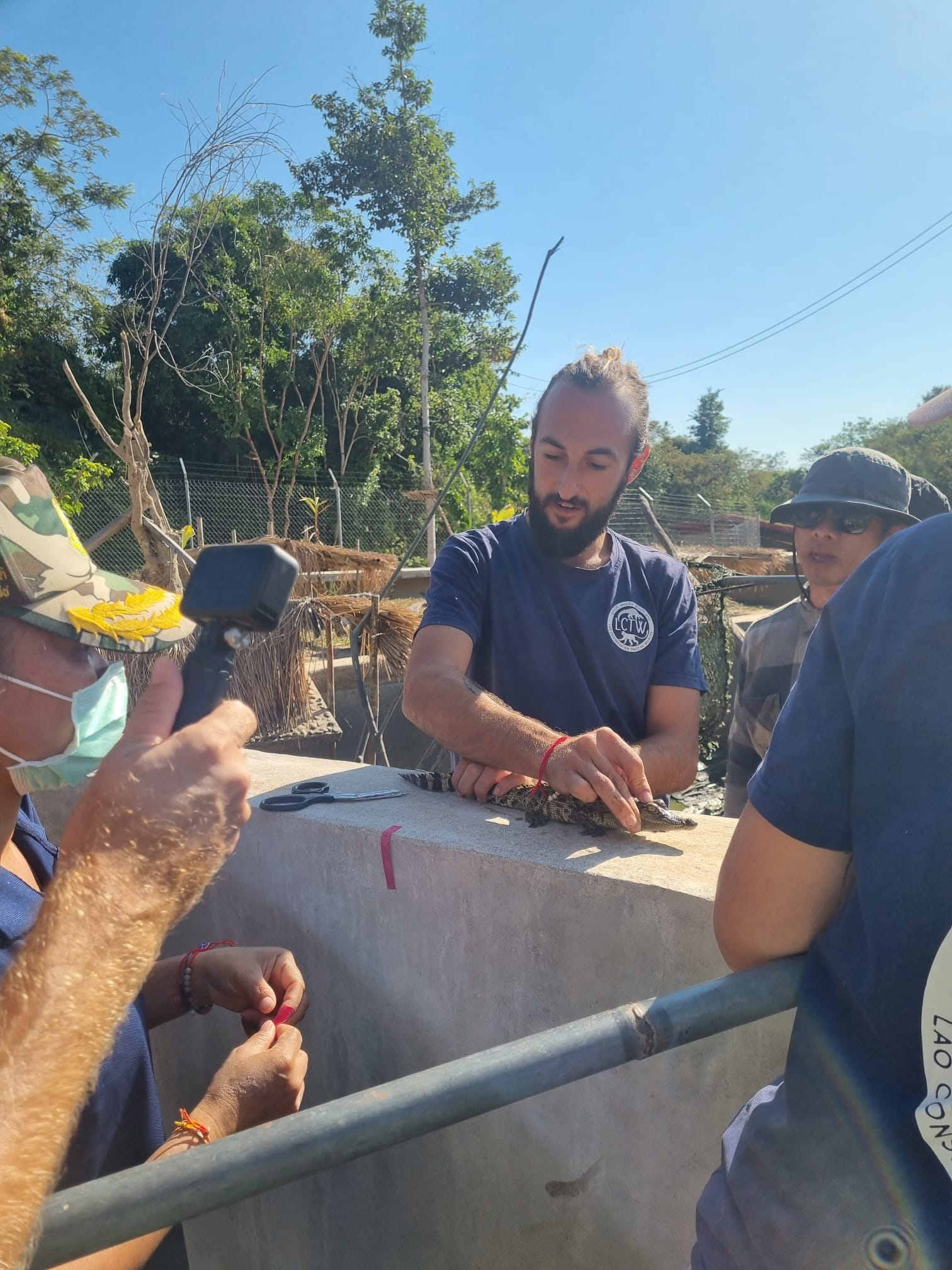
Andy Gauthier
Founder of Restore
Rehabilitator & Animal Manager
Restore was created to close the gap between wildlife rehabilitation and post-release monitoring.
During my years working in wildlife rescue centers, post-release monitoring was often one of the most difficult aspects to develop due to limited funding, lack of personnel, and the many responsibilities involved in rehabilitation work. Yet this stage is essential in order to understand whether rehabilitation has truly been successful.
Improve Survival
Better post-release monitoring for better wildlife survival.
Inspire the Next Generation
Train future conservationists to protect the future of our planet.