The Practical Course

The Practical course

100% real conservation work

The Practical course includes everything found in the E-Learning

The Practical course is 100% real conservation work, having a direct impact on scientific research and wildlife.

Check out the E-Learning page

Extra skills and benefits

  • Basic veterinary knowledge.
  • Baby feeding (depending on rescues).
  • Taking care of long-term residents (cleaning, feeding & enrichment).
  • Tree climbing skills and knots.
  • Learning about a new culture, being fully involved in a team/project.

Never forget to have fun

Included in the program:

  • Several night walks in national parks.
  • Zipline in Nam Pien Yorlapa or at the Rock ViewPoint.
  • 1 or 2 outside activities (kayaking, tubing, rock climbing, …)

Location

Where you will work in Laos

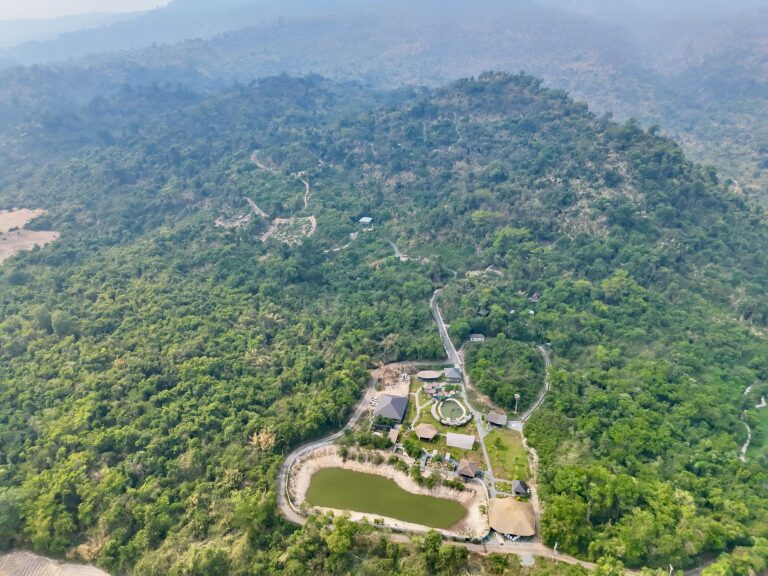
Three sites, from rescue and rehabilitation to post-release monitoring and field surveys.

Timeline :

  1. Month 1

    • 2 weeks of husbandry at LCTW.
    • 2 weeks choosing your main project (personal or group).
    • Install a GPS device on a pangolin (date subject to change depending on rescues).

    📍 LCTW

  2. Months 2 – 3

    • Husbandry, baby feeding & rescue (if possible): 1 day/week.
    • Working on your project: 1–2 days/week.
    • Working on rehabilitation or survey: 2–3 days/week.

    📍 LCTW & Phou Khao Khouay National Park

  3. Month 4

    • Full-time survey of an endemic species, the Lao langur (population count with thermal drone, ethogram, activity budget, diet, …).

    📍 Nam Kading Biodiversity Area

  4. Month 5

    • 2 weeks finalising the survey.
    • 2 weeks of holidays to discover Laos or South-East Asia.
  5. Month 6

    • Husbandry & baby feeding: 1 day/week.
    • Working on your project: 1–2 days/week.
    • Working on rehabilitation or survey: 2–3 days/week.

    📍 LCTW & Phou Khao Khouay National Park

  6. Months 7 – 12

    • Finish your project: analyse the data and run the statistics.
    • If possible, publish your results as a scientific paper, after peer review by a PhD biologist from Restore.

    📍 Remote

  7. Month 12

    • Receive your diploma.
    • Ask for references.
    • Drop a review (only if you liked the experience!).
    • Go find your dream job and keep helping wildlife on their way back to freedom!

Budget :

Where your practical course fee goes

Restore Wildlife Education is a French non-profit organisation. Here is exactly what your practical course fee covers, from your accommodation in Laos to the scientific support behind your research.

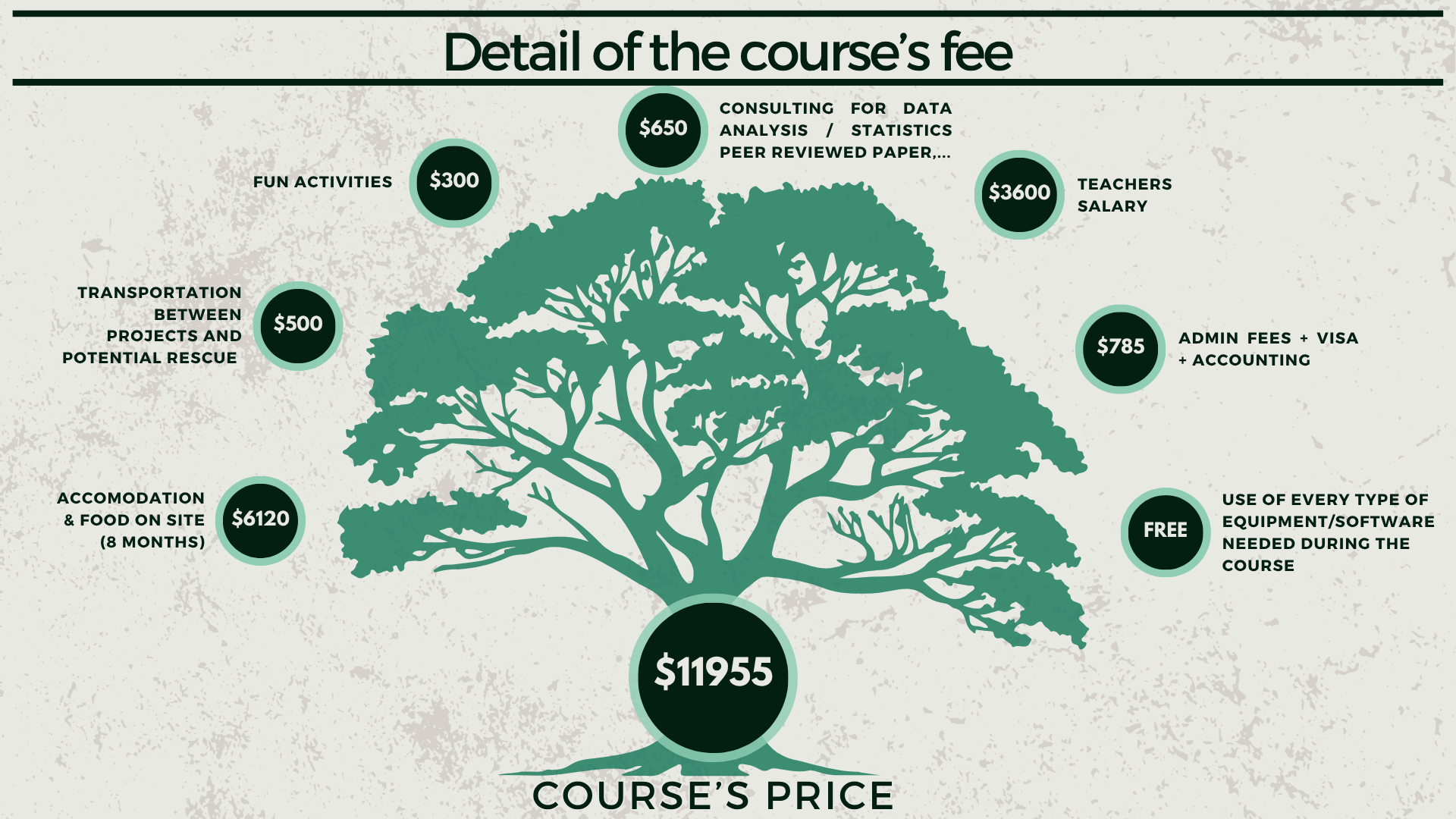
Practical course fee$11,955
  • Accommodation & food on site $6,12051.2% Your housing and meals for the 6 months you spend in the field.
  • Teachers' salaries $3,60030.1% The rehabilitators, veterinarians and researchers who train and supervise you throughout the year.
  • Administration, visa & accounting $7856.6% Your visa, the administrative costs of hosting you in Laos, and accounting.
  • Scientific consulting $6505.4% Expert support for data analysis and statistics, and peer review of your scientific paper.
  • Transportation $5004.2% Travel between the rescue centre, the survey area and the release site, and to wildlife rescues.
  • Activities $3002.5% Night walks in the national park, a zipline and one or two outdoor activities.
  • Equipment & software Included All the equipment and software you need during the course (tracking devices, camera traps, thermal drone, monitoring software) at no extra cost.

Your work on the practical course directly contributes to real rehabilitation, release and post-release monitoring of wildlife in Laos. Questions about our finances? Write to andy@restore-education.org.